Oluwaseun (Sean) Alo
| GitHub | ResearchGate | Google Scholar |
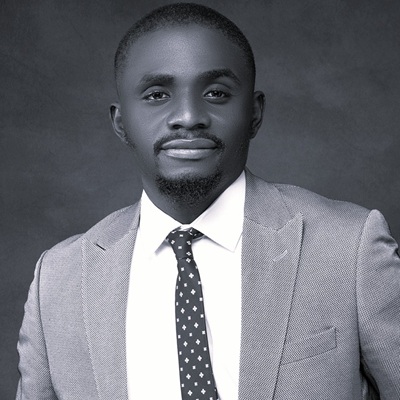
I am Oluwaseun (Sean) Alo, a Ph.D. candidate in Electrical Engineering at the University of Kentucky (expected May 2026), conducting research at the Unconventional Computing Architectures and Technologies (UCAT) Laboratory. My work lies at the intersection of photonic computing, hardware acceleration, and energy-efficient architectures for machine learning.
Currently, I am designing scalable tensor processing architectures leveraging photonic integrated circuits (PICs) for energy-efficient deep learning inference. My research includes building optical and electronic test benches for device characterization, conducting Ferromagnetic Resonance (FMR) experiments for spintronic material analysis, and modeling photonic devices in Lumerical and Cadence for system-level optimization. I focus on device-circuit-architecture co-design to achieve significant throughput improvements—achieving 3.2× performance gains—while reducing power consumption.
Before my Ph.D., I worked at Huawei Technologies Nigeria Co. Ltd for 5 years, where I led optical and wireless network infrastructure projects, focusing on optical transmission systems, hardware evaluation, and large-scale system integration across 150+ sites.
My professional and research experiences bridge photonic integrated circuits, optical systems, hardware design, and ML accelerators, motivating my pursuit of next-generation photonic computing solutions for AI and high-performance computing applications.
🎓 Education
- Ph.D. in Electrical Engineering, University of Kentucky, Lexington, KY (Aug 2022 – May 2026, Expected) 🎯
- M.Sc. in Electrical/Electronic Engineering
- B.Eng. in Electrical/Electronic Engineering
📜 Certifications & Training
- AIM Photonics Packaging Workshop, American Institute for Manufacturing Integrated Photonics (Feb 2026) ✨
Advanced training in photonic integrated circuit packaging, co-packaged optics (CPO), fiber-to-chip coupling, thermal management, and commercial deployment techniques
💼 Professional Experience
Graduate Researcher – UCAT Lab, University of Kentucky 🔬
Aug 2022 – Present
- Built optical and electronic test benches to evaluate photonic integrated circuits (PICs), performing optical alignment with submicron precision, laser-fiber coupling optimization, and automated signal-response measurements using tunable laser sources and high-speed photodetectors
- Developed scalable tensor processing architectures leveraging analog photonic computing, achieving 3.2× throughput improvement and 40% reduction in electronic control overhead through optimized dataflow and device-circuit co-design
- Set up Ferromagnetic Resonance (FMR) test benches integrating microwave sources (up to 20 GHz), vector network analyzers, electromagnets with automated field control, and data acquisition to characterize thin-film magnetic heterostructures
- Modeled device-level performance of microring resonators (MRRs) and Mach-Zehnder interferometers (MZIs) in Lumerical INTERCONNECT, analyzing impact of fabrication variations, optical loss (<0.5 dB/cm), and thermal crosstalk on system-level accuracy
- Published 4 peer-reviewed papers in IEEE and ACM venues on photonic accelerators, stochastic computing, and GEMM optimization for neural networks
Lead Project Engineer – Huawei Technologies Nigeria Co. Ltd 📡
Jan 2020 – Aug 2022
- Led technical delivery of 70+ optical and wireless network infrastructure projects valued at $50M+, making architecture decisions for optical fiber networks, microwave backhaul, and multi-band radio access deployments
- Evaluated and selected critical hardware components including optical amplifiers (EDFA), wavelength-selective switches (WSS), and coherent transceivers, ensuring 15–20% energy efficiency improvements through optimized optical power management
- Managed cross-functional engineering teams across 8–12 concurrent deployments, reducing commissioning timelines by 20% through systematic workflow optimization
Commission Engineer – Huawei Technologies Nigeria Co. Ltd 🛠️
Sep 2017 – Dec 2019
- Commissioned 80+ 4G/LTE base stations and optical transmission systems, performing hardware validation, RF drive testing, and optical link verification using OTDRs, achieving 99%+ first-time acceptance rate
- Conducted field-level testing of optical transceivers (10G/100G DWDM) and baseband units through systematic measurement including optical power budgets, fiber loss characterization, and dispersion analysis
- Optimized network coverage across 300+ square kilometers by analyzing signal quality metrics, improving cell-edge throughput by 30% and reducing call drop rates by 25%
🔬 Research Interests
- 🔆 Photonic Integrated Circuits & Silicon Photonics
- 🚀 Hardware Accelerators for Machine Learning
- ⚡ Energy-Efficient and Scalable Computing Architectures
- 🔗 Optical Interconnects & Co-Packaged Optics
- 🎯 Device-Circuit-Architecture Co-Design
- 🧠 Neuromorphic and Analog Computing Systems
🚀 Selected Projects
Photonic Tensor Processing Architecture (Dissertation Research, Ongoing) 🎯
Designing scalable photonic tensor cores using MZI meshes and MRR weight banks for energy-efficient deep learning inference. Achieved 3.2× throughput improvement through custom dataflow optimization. Modeling device performance in Lumerical and Cadence, co-designing photonic circuits with CMOS electronics for 8-bit integer operations. Building optical test bench for characterizing fabricated MRR-based circuits.
Tools: Lumerical, Cadence, Python, MATLAB
SPOGA: Scalable Photonic GEMM Accelerator 📊
Architected low-power analog photonic accelerator for INT8 matrix multiplication. Implemented novel encoding scheme reducing optical modulation energy by 35%. Performed device-circuit-architecture co-simulation analyzing MRR fabrication variations (±5 nm tolerance), optical loss, and crosstalk effects.
Published at IEEE ISVLSI 2024 📄
Tools: Lumerical, Python, PyTorch
ASTRA: Optical Stochastic Computing Accelerator ⚡
Contributed to silicon photonic transformer accelerator design. Analyzed energy-accuracy tradeoffs for stochastic bit-stream generation using integrated MZ modulators and optical MAC operations. Demonstrated 2.5× speedup for LLM inference.
Published in ACM TECS 2024 📄
Tools: Python, Lumerical, TensorFlow
Ferromagnetic Resonance (FMR) Characterization (Ongoing) 🧲
Conducting FMR-based material characterization of thin-film magnetic heterostructures. Analyzing damping, anisotropy, and resonance properties to guide hybrid spintronic-photonic computing designs and device modeling for next-generation accelerators.
Tools: VNA, electromagnets, Python automation
📚 Selected Publications
-
I. Thakkar, S. S. Vatsavai, V. S. P. Karempudi, and O. A. Alo.
Scaling Up the Sustainability of Photonic Tensor Cores with Device-Circuit-Signaling Co-Design
IEEE International Conference on Computer Design (ICCD), 2025, Dallas, TX, USA. -
S. Afifi, O. A. Alo, I. Thakkar, and S. Pasricha.
ASTRA: A Stochastic Transformer Neural Network Accelerator with Silicon Photonics
ACM Transactions on Embedded Computing Systems (TECS), 2024. -
S. Afifi, O. A. Alo, I. Thakkar, and S. Pasricha.
A Light-Speed Large Language Model Accelerator with Optical Stochastic Computing
ACM Great Lakes Symposium on VLSI (GLSVLSI), 2025, pp. 922–928. -
O. A. Alo, S. S. Vatsavai, and I. Thakkar.
Scaling Analog Photonic Accelerators for Byte-Size, Integer GEMM Kernels
IEEE International Symposium on VLSI (ISVLSI), 2024, Knoxville, TN, USA.
https://doi.org/10.1109/ISVLSI61997.2024.00080 -
O. A. Alo and A. R. Zubair.
Content-Based Image Retrieval System Using Second-Order Statistics
International Journal of Computer Applications (IJCA), 2020.
https://doi.org/10.5120/ijca2020920475
Full publication list: Google Scholar
🛠 Technical Skills
Hardware Design & Simulation: Lumerical (INTERCONNECT, MODE, FDTD), Cadence Virtuoso (schematic, layout, DRC, LVS), SystemVerilog, Verilog, Silicon photonics device modeling, Analog/mixed-signal circuit design
Photonics Packaging & Integration: Co-packaged optics (CPO), Fiber-to-chip coupling, Package-level thermal management, PIC assembly techniques, Industry-standard packaging workflows
Experimental & Characterization: Optical alignment, Laser-fiber coupling, Photodetector characterization, OTDR, Vector Network Analyzer (VNA), Spectrum analyzers, Optical spectrum analyzers (OSA), FMR test benches, S-parameter measurements (up to 20 GHz), Python automation (GPIB/SCPI control)
Programming & Software: Python, C++, MATLAB, Git, Linux/Bash
ML Frameworks & Tools: PyTorch, TensorFlow, Scikit-learn
Architecture & Analysis: Dataflow optimization, Energy-performance modeling, Throughput-latency analysis, Hardware-algorithm co-design, Quantization-aware architectures, Tensor core and photonic computing system simulation
📫 Contact
- Email: oluwaseunalo@gmail.com
- LinkedIn: linkedin.com/in/seunalo
- GitHub: github.com/snalo
- Work Authorization: U.S. Permanent Resident/Green Card Holder 🇺🇸
🎯 Current Status
Actively seeking opportunities in:
- 🔆 Photonic integrated circuit design and validation
- 🚀 Hardware accelerator development for AI/ML
- 📡 Optical systems engineering
- 🔬 Research and development in emerging computing architectures
Available: May 2026 (post-PhD defense) for full-time positions
Last updated: March 2026